
To tell you the truth, this blog post has been in my drafts for about three years now. I didn’t want to delete it because it felt too important, but I couldn’t find the words to say to finish the post. What comfort do we have in the face of grief?
Grief is unpredictable, confusing, immensely painful and can become all-consuming. But I do know this: we do not grieve alone.
I don’t pretend to know what it feels like to lose a parent or sibling or spouse, or to know what it’s like to watch a friend or family member grow more and more ill by the day. And I won’t pretend to know what it feels like when death is a daily reality, when conflict, persecution or genocide tear at the walls of your very existence.
The grief that I do know is the grief of losing a friend, a friend I had known almost as long as I could remember, a friend who died far too young.
When I was 11, not long into the start of secondary school, one of my closest friends, also 11, died very suddenly. I didn’t know how to process how something like this could happen. 15 years later it still feels like I don’t quite know how to come to terms with what happened. And I still remember the day I found out with more clarity than I remember two days ago.
Grief seems to me to be one of those things that so many of us have experienced, yet it can hard to find the words to explain what we feel. So I’ve decided to use the words of others to try to better vocalise and to better understand. Here are a few quotes on grief that I’ve read in recent years:
As the nights passed, my loss became more painfully real. The various aspects of grief came in monstrous waves. I would just be coming up for air when another would crash over me, sending me tumbling back into grief’s dreaded grip.
Emily Foreman, We Died Before We Came Here
As humans, we naturally try to avoid suffering, but, contrary to all our instincts, to heal our grief we need to allow ourselves to feel the pain.
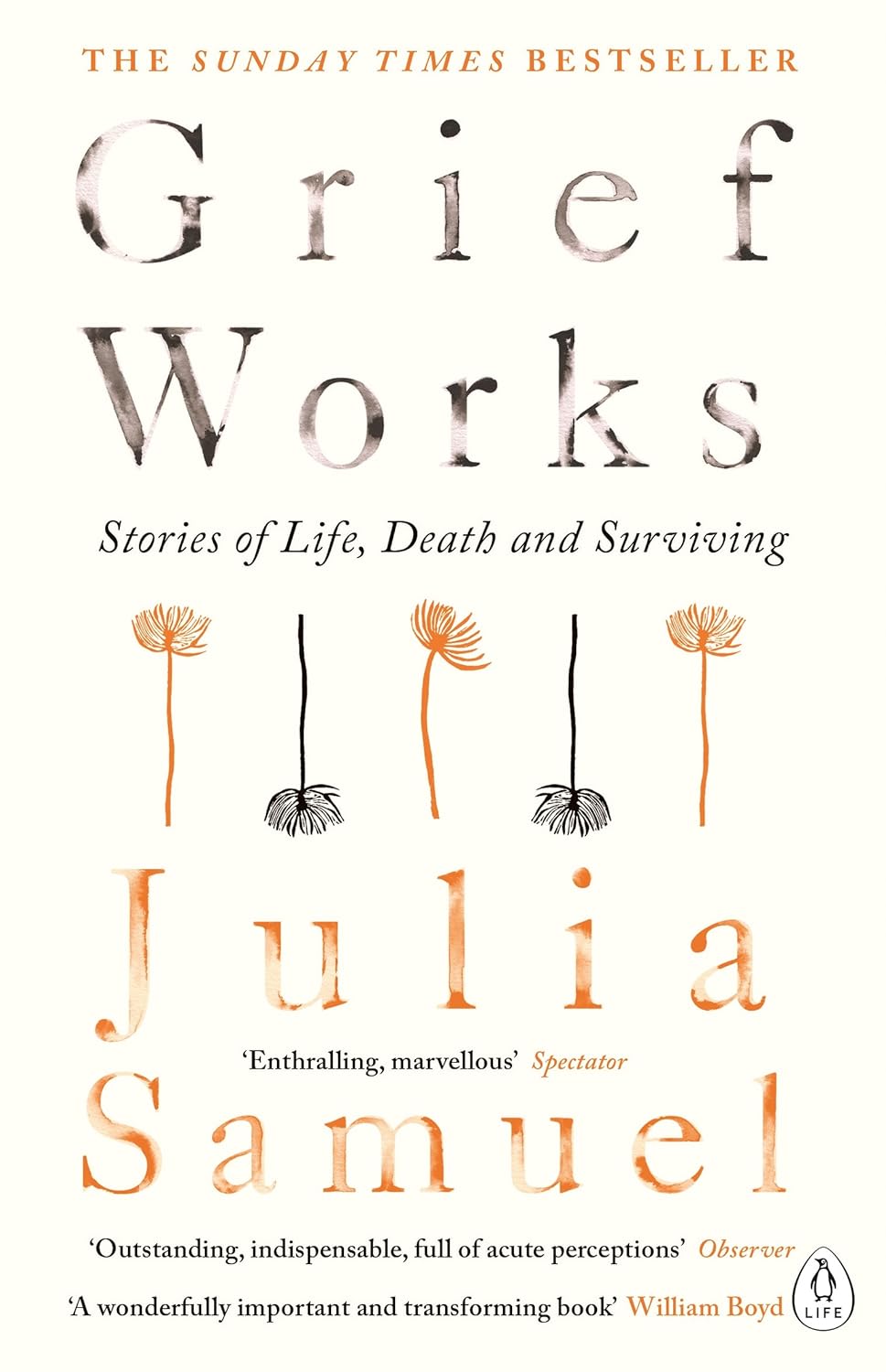
Julia Samuel, Grief Works
Bereavement is not a moment in time but something you carry with you for life.
Karen Palmer, Jennifer: A Life Precious to God
Grief doesn’t hit us in tidy phases and stages, nor is it something that we forget and move on from; it is an individual process that has a momentum of its own, and the work involves finding ways of coping with our fear and pain, and also adjusting to this new version of ourselves, our ‘new normal’.
Julia Samuel, Grief Works
I want to be quite silent and quiet and try to realise it. I can’t realise it. Half the time it seems to me that he can’t be dead; and the other half seems as if he must have been dead for a long time and I’ve had this horrible dull ache ever since.
L.M Montgomery, Anne of Green Gables
Love from others is key in helping us to survive the love we have lost.
Julia Samuel, Grief Works
In the night she awakened, with the stillness and the darkness about her, and the recollection of the day came over her like a wave of sorrow. She could see his face smiling at her as he had smiled when they parted at the gate that last evening… Then the tears came and Anne wept her heart out. Marilla heard her and crept in to comfort her… ‘but God knows best’.
L.M Montgomery, Anne of Green Gables



There are many questions about death that I can’t answer. What does Marilla in Anne of Green Gables mean when she says that ‘God knows best’? I can’t say for sure, but it did lead me to think…
When we are facing pain, such as grief, it is easy to imagine that God is far away, that in his perfect existence, surely he cannot understand what we are facing in the devastated and broken world.
Yet we have a God who knows pain. The one who conquered death also experienced the same suffering that many continue to face now. The shortest and yet one of the most profound verses in the Bible reads:
Jesus wept.
John 11:35
And it is the death of a dear friend that causes Jesus to weep. Here is the verse in its context:
“When Mary reached the place where Jesus was and saw him, she fell at his feet and said, “Lord, if you had been here, my brother would not have died.” When Jesus saw her weeping, and the Jews who had come along with her also weeping, he was deeply moved in spirit and troubled. “Where have you laid him?” he asked. “Come and see, Lord,” they replied. Jesus wept. Then they said, “See how he loved him!”
When death comes close, the pain is real. The loss is awful. And Jesus himself knew this pain – he lost friends to death, he knew the grief of losing Joseph, his earthly dad, he saw the pain of those whose child had died and joined them in that grief. He never ran from grief but always went to it.
He himself suffered death. He died on the cross in our place, taking the punishment for sin that we deserved. He is a saviour who not only grieved but who gave his very own life for us.
And he is the saviour that walks with us in our grief. How is that possible? Because when Jesus came into the world he didn’t just live amongst us, nor did he just die. He rose again. He overcome the grave. In the agony of grief, perhaps we can find comfort in the arms of our risen saviour.
He wasn’t the one who harmed. God was the one who was with us and grieved our losses.
Karen Palmer, Jennifer: A Life Precious to God


 The Lilies of the Field