
Having had a little more time to process my diagnosis (Borderline Personality Disorder/Emotionally Unstable Personality Disorder) I thought I’d share a little more of what BPD feels like day to day. In particular, I wanted to share a little about how BPD impacts the way I relate to others, how it impacts how tired I am and how it relates to my faith as a Christian.



Relating to others
From my experience, and from reading what others have shared, here are a few things that people with BPD might find difficult:
- Separation from ‘favourite people’, lack of quality time with loved ones, seeing them without me – this can trigger feelings of replacement and fears of being unwanted
- Sudden change of plans, or break in routine or expectations
- Being ignored, short or unmoved responses, having ideas or suggestions ignored, being left out of a conversation or a event, not being kept in the loop or really anything that can be interpreted as ignored – this can trigger strong fears and feelings of abandonment
- Criticism or a negative tone
- Disappointing others
- Being misunderstood during a conversation or argument
- Being laughed at, or not understanding a joke between other people
- Conflict or someone needing space, or someone setting a boundary – this can be misread by me as being pushed away and can sometimes even feel like the end of the relationship
- Difficult memories
Obviously, anyone might find these things difficult and for a whole variety of reasons, and many of these things will happen on a daily basis and might even be unavoidable, but I think it’s helpful to know that these things can trigger particularly difficult emotions for people with BPD.
I’m also not trying to say that my response to any of these actions is always rational. I’m likely to cause changes in plans, to misunderstand people, disappoint them or even ignore things that are important so I can’t expect other people to never do that either. My friends spending time with their other friends is obvious not a bad thing, and neither is someone being clear when they need some space. However, I think it’s helpful to know that these are triggers, so that it’s easier to understand why my emotions or behaviour may have changed so quickly.
These are some ways in which I might respond:
- Jumping to conclusions, over -analysing, emotionally detaching, isolating myself, ghosting others – though not usually for long enough that people would notice.
- Melt down because of things others view as no big deal.
- Because my BPD is quieter I’m less likely to outwardly show anger but I can often become irritable or silently angry. Not that anger is always wrong – I’ve had some good reasons to be angry, but more often than not it’s disproportionate and unhelpful.
Again, I’m not saying that these responses are good, or that they are ok because I have BPD – I’m working on it, but it can be difficult sometimes to work out how rational my thoughts are.
During one of my deep dives into BPD in the early hours of the morning I came across these words, and found them relatable:
This disorder is difficult. Everyday is a battle in your head. Fighting your emotions, reminding yourself that your friends don’t hate you. One word, one look, anything that feels like rejection, IS rejection. Then you obsess about it. You pick things apart. Try to control everything in your head is exhausting. Some days it feels like you don’t have a heart. Other days it feels like it is going to explode out of your chest.
Why do I feel so tired?
Quite often I catch myself saying ‘I don’t know why I feel so tired’ but in reality, I know plenty of reasons for why I feel exhausted.
Causes of fatigue among people with BPD:
- The emotional dysregulation that comes with BPD is tiring to say the least. A few hours of intense worry or sadness can leave me feeling like I’m running on empty.
- Many people with BPD also have other mental health conditions like anxiety and depression – both of which can lead to fatigue, exhaustion and low energy.
- A person with BPD will likely be ‘masking’ their symptoms for significant parts of the day. If you know me, you may or may not realise that I might be masking a lot of the time – if I showed my emotions to the extent I feel them things would probably get quite dramatic. I don’t really choose to mask in this way, often it’s more instinctive, but it can also be pretty draining.
- I take medication for my anxiety and depression and – guess what – fatigue and drowsiness can be a side effect of these too. Mine actually comes with a warning not to operate machinery if I’m feeling drowsy. Which is a shame really – think of all the machinery I could be operating.
- Stress, impulsivity, symptoms of BPD can lead to mental and physical exhaustion.
- As is now pretty well known, our mental health can significantly effect our sleep, and our sleep can, in turn, impact our mental health. Thankfully I still get a decent amount of sleep, but on those nights when I’ve only had 4 hours I do start feeling a bit delirious, or like a baby, crying because they’re tired, but somehow too tired to go to sleep.
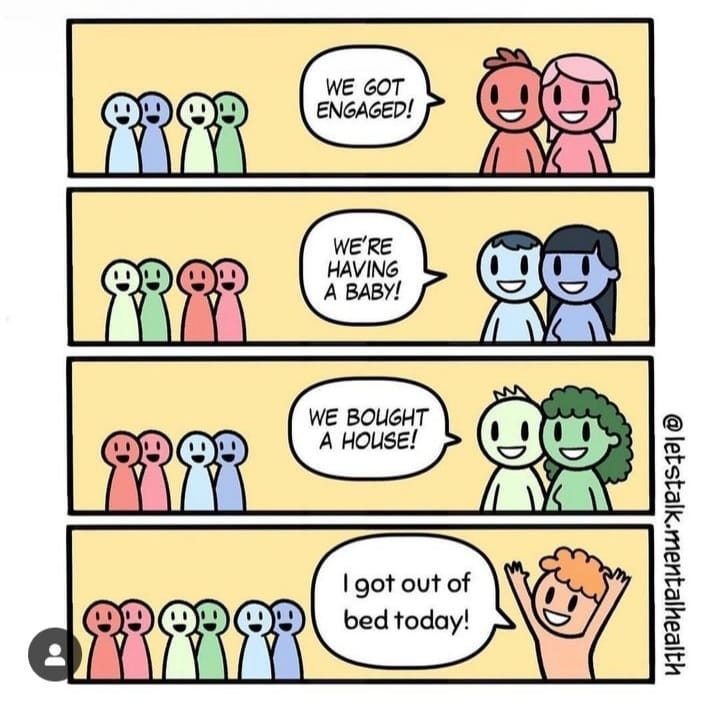
So next time you catch me saying, ‘I don’t know why I’m feeling so tired’, you can remind me that, actually, I probably do.

My faith and BPD
Being a Christian makes a big difference to my experience of Borderline Personality Disorder and in reality, it is a hope, comfort and the answer to many of the struggles I face.
In the face of my fear of abandonment, I can turn and rely on a God who will never abandon me. With emotions that can change rapidly and that feel outside of my control, I can trust in a God who remains the same and offers comfort when I am in need. When I struggle to find a sense of self, I can remind myself that, as a Christian, my identity is in Christ.
When the emptiness common with BPD feels overwhelming I can call out to God, who is everything I need. Whilst small actions and words can leave me afraid that someone has had enough of me, I can know with certainty that God will never let me down. When I react in anger, or impulsively do something I shouldn’t I can run to God for forgiveness, knowing that he will continue to transform me as I seek to overcome these struggles.
I guess the difficult thing is that whilst I know all these things, BPD can make it hard to feel them. And sometimes I feel like people struggle to understand how I can know all of this and still feel so overwhelmed. BPD can make going to church hard too, and it feels hard to struggle in that way with something I care about so much.
I have to remind myself of these things every day, and there are days when these realities feel so far away, but I am grateful that as I struggle with this condition, God provides my hope, identity, purpose and belonging.

 The Lilies of the Field